HRLUX Lighting | Light the Globe, Power the Future


HRLUX Lighting | Light the Globe, Power the Future
Tennis is a high-speed, high-precision sport requiring strict lighting uniformity, stable brightness, low glare, and accurate vertical illumination. Whether for outdoor open-air courts or indoor stadium courts, the lighting layout must comply with national standards and CIE 42 technical specifications to ensure athletes can accurately judge ball trajectory, speed, and rotation.
This article sorts out the complete tennis court lighting design standard, including court size, illumination grading standard, outdoor pole layout rules, indoor ceiling layout modes, height requirements, anti-glare rules, and surface reflectivity standards. It provides a fully executable lighting layout solution for engineers, stadium builders, and project contractors.
1.1 Court Dimension
Standard single tennis court size:
Length: 23.744 m
Width: 10.974 m
Net height: 0.9 m – 1.06 m
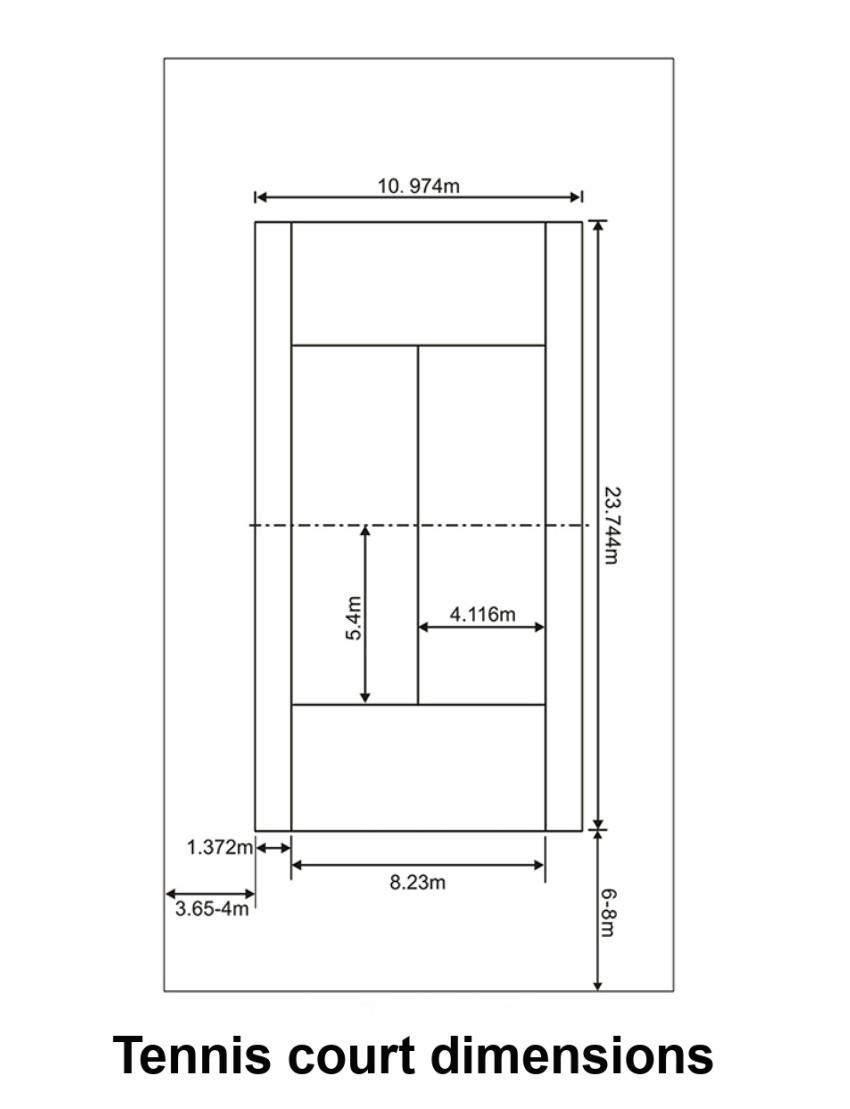
1.2 Safety & Lighting Margin (Must Reserve for Lighting Design)
To avoid dark zones and ensure smooth running and ball catching, the actual lighting coverage area must reserve outer margins:
Baseline rear reserve: 6–8 m
Side sideline reserve: 3.65–4 m
Only with sufficient marginal space can the lamp angle be reasonably projected without dead corners and without off-site glare overflow.
We sorted and unified the confusing standard table in the original material into clear, publishable grade classification.
2.1 Illumination Grade Application
Grade Ⅰ: Fitness & Entertainment (Eh ≥ 300lx)
Grade Ⅱ: Professional Training & Amateur Match (Eh ≥ 500lx)
Grade Ⅲ: Formal Professional Match (Eh ≥ 750lx)
Grade Ⅳ-Ⅵ: TV Broadcasting & International Tournament (Vertical Ev 1000–2000lx)
2.2 Core Standard Parameters
Color rendering Ra ≥ 65 (training), Ra ≥ 80–90 (match & TV broadcast)
Color temperature ≥ 4000K–5500K (neutral white for sports vision)
Glare GR ≤ 55 (outdoor), GR ≤ 35 (indoor)
Uniformity U1/U2: Match ≥0.6–0.8, Training ≥0.5
2.3 CIE 42 International Uniformity Limit
Entertainment court: Uniformity ratio ≤ 1.5
Training court: Uniformity ratio ≤ 1.5
Competition court: Uniformity ratio ≤ 1.3 (Strictest for professional events)
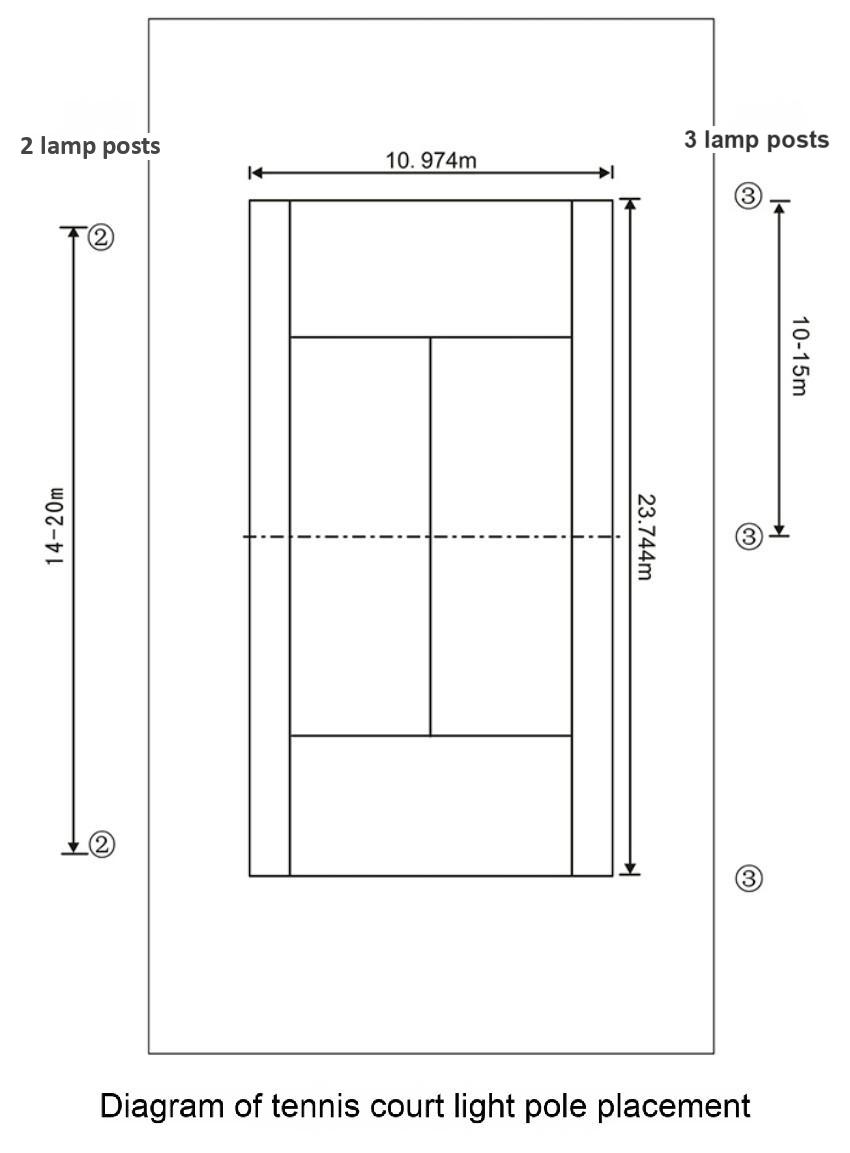
3.1 Pole Layout Principle
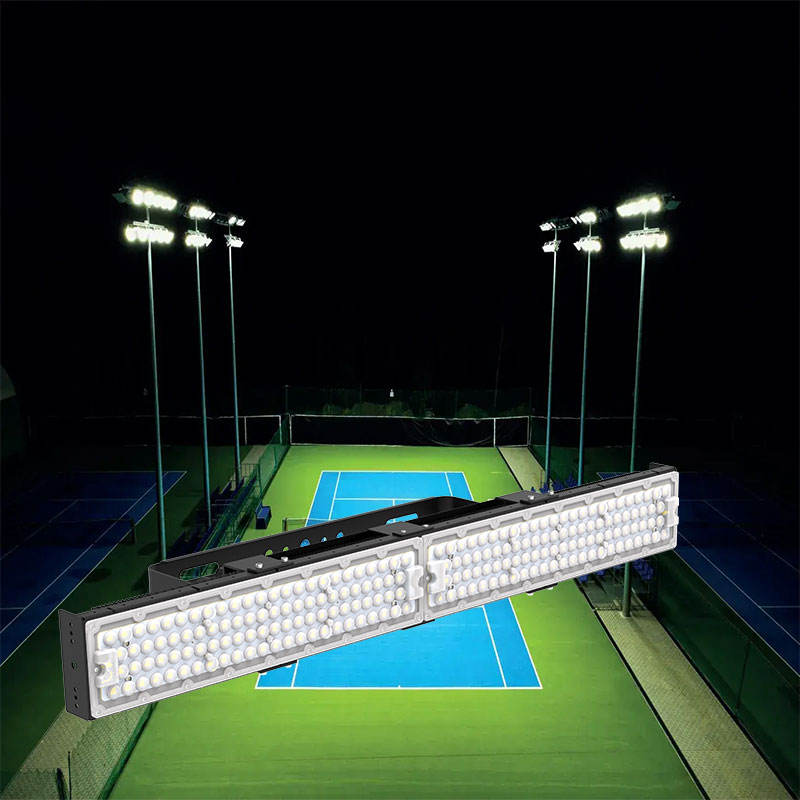
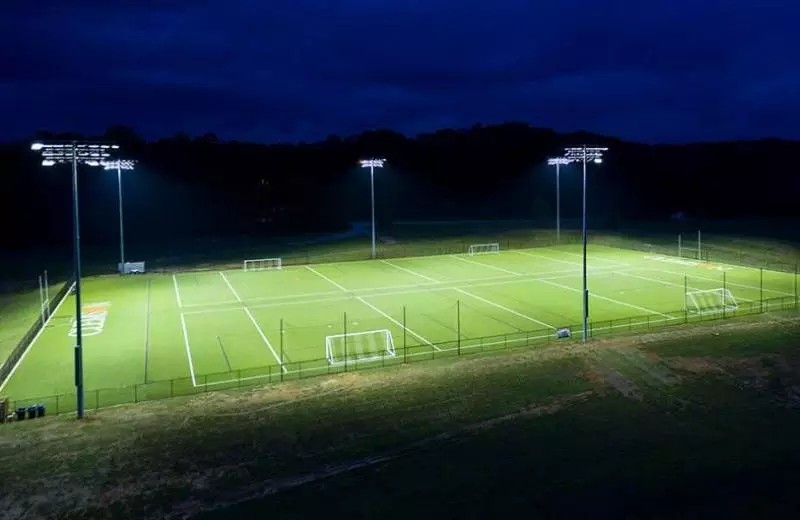
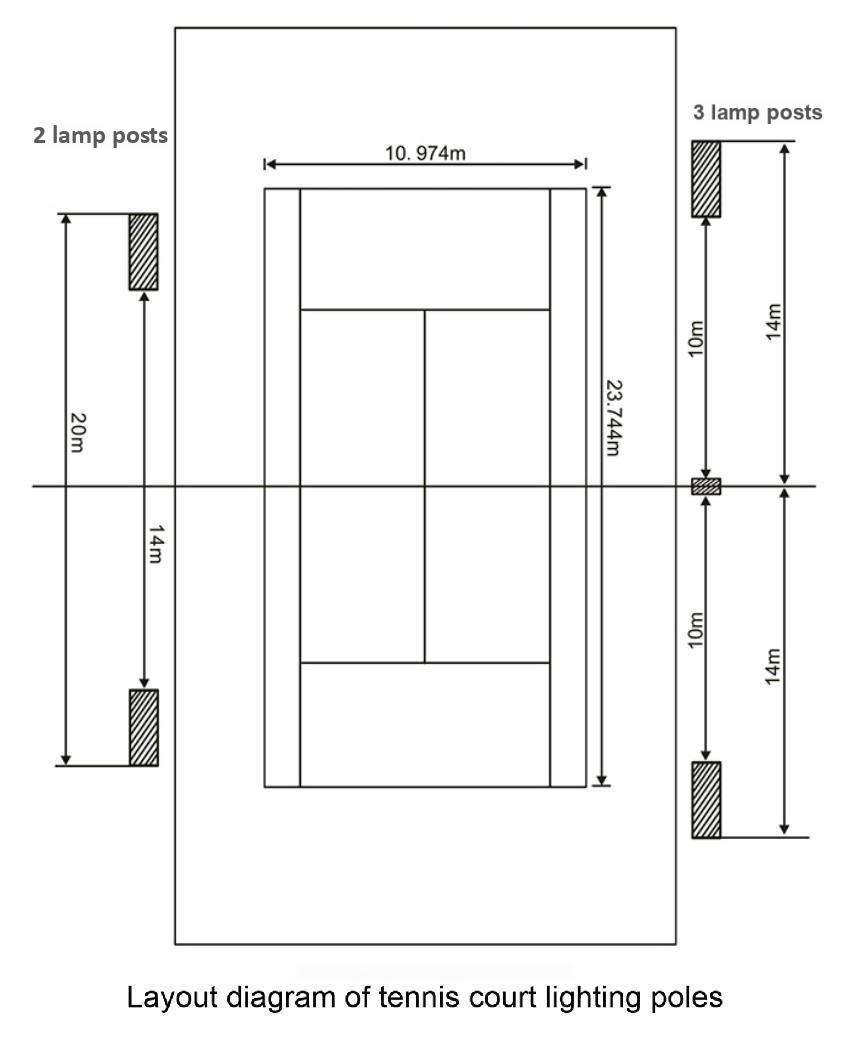
Outdoor tennis courts adopt side longitudinal lighting arrangement (long-axis bilateral layout), which is the only recognized standard for official matches.
Common pole quantity per side:
Ordinary recreation court: 2 poles per side
Standard training & amateur match: 3 poles per side
Professional official competition court: 4 poles per side
Key rule: No light poles between two adjacent courts to avoid mutual light interference and cross glare.
3.2 Outdoor Lamp Pole Height Requirement
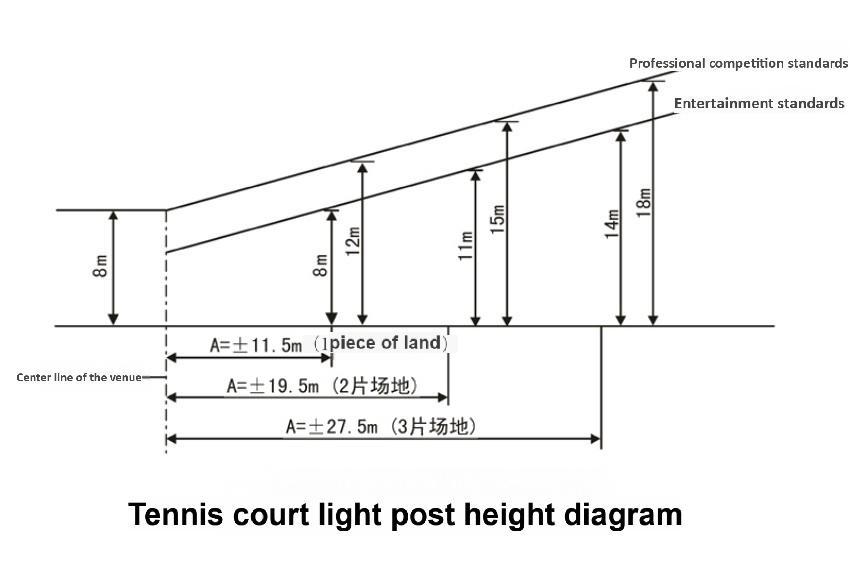
Entertainment & daily training: Minimum height 8 m
Formal match level: Minimum height 12 m
Too low height will cause severe direct glare and affect ball judgment at high altitude.
3.3 Anti-Glare Control for Outdoor Courts
If the lamp beam angle is too wide or the aiming point is inaccurate, stray light will produce disabling glare outside the boundary.
Solutions:
1.Adopt professional tennis narrow-beam sports floodlights
2.Precise aiming toward the court center
3.Use anti-glare baffles and cut-off optical design
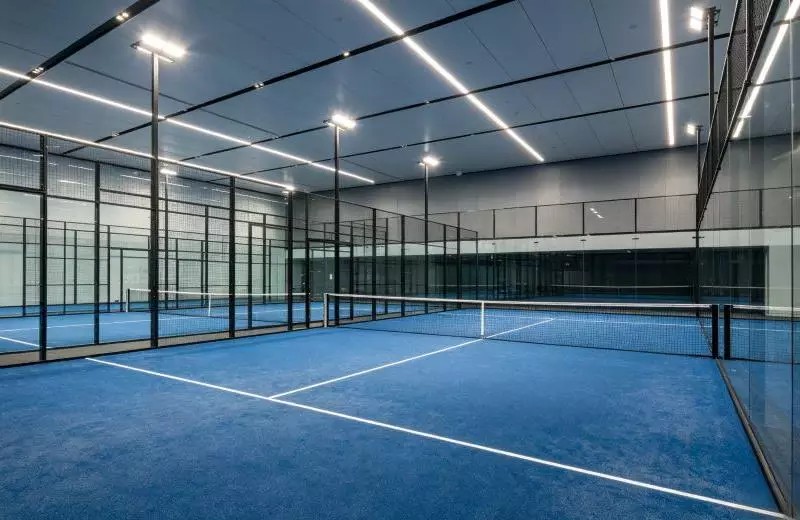
Indoor tennis lighting is stricter than outdoor because wall, ceiling, and ground reflectance directly affect visual comfort and competition fairness.
4.1 Indoor Surface Reflectivity Standard (CIE 42)
Ceiling reflectivity: >0.6 (matte non-gloss)
Wall reflectivity: 0.2–0.6 (low reflection, colorful decoration allowed at both ends)
Floor reflectivity: >0.25 (matte finish)
4.2 Core Indoor Lighting Forbidden Rule (Very Important)
No lamps are allowed above the PPA (Primary Playing Area)
Lamps directly above the competition area will form serious vertical glare, causing athletes unable to track high-speed overhead balls.
Lamp installation height requirement:
Net area lamp height: ≥ 9.144 m
Baseline area lamp height: ≥ 9.096 m
4.3 Natural Light Restriction for Indoor Courts
Natural daylight is only allowed for low-level training and fitness courts. Official matches prohibit single natural daylight lighting
Daylight design restrictions:
No direct solar radiation
No windows on the rear baseline walls
Adopt frosted glass or shading system
Avoid uneven brightness contrast inside the venue
5.1 Group Cluster Layout (2/4 lamps per group)
Suitable for comprehensive gymnasium ceiling installation. Features: Even overall brightness, small shadow fluctuation, suitable for multi-functional stadiums.
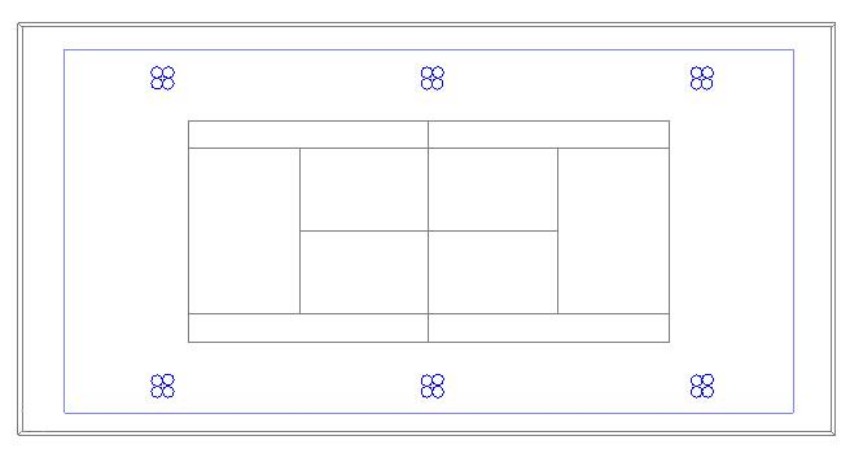
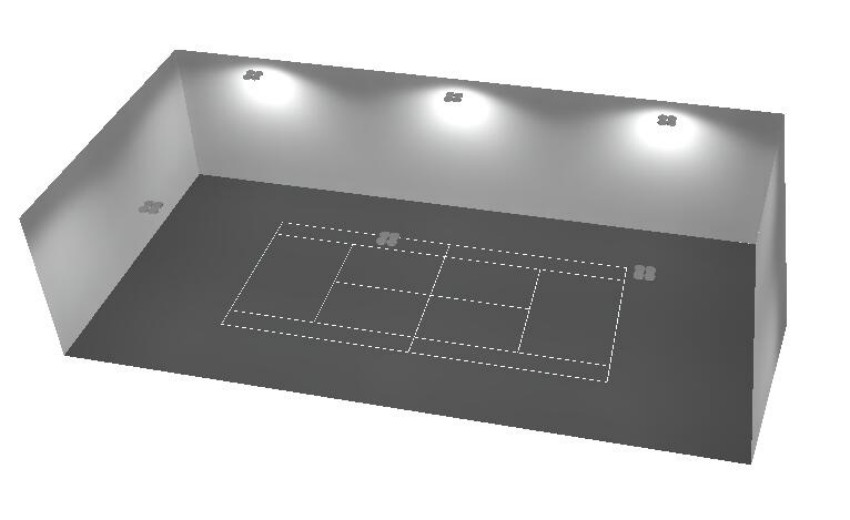
5.2 Single Row Side Layout (Regional Layout)
Lamps arranged along both sides of the long axis. Features: Concentrated light distribution, high vertical illumination, most suitable for professional dedicated tennis halls.
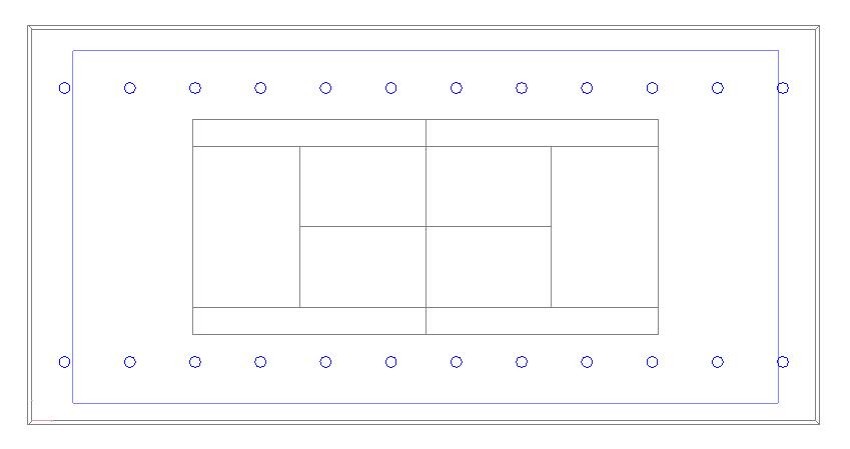
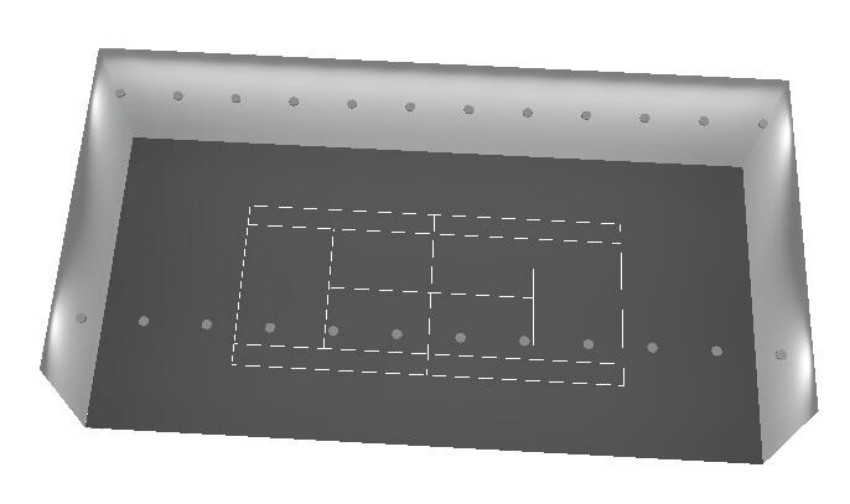
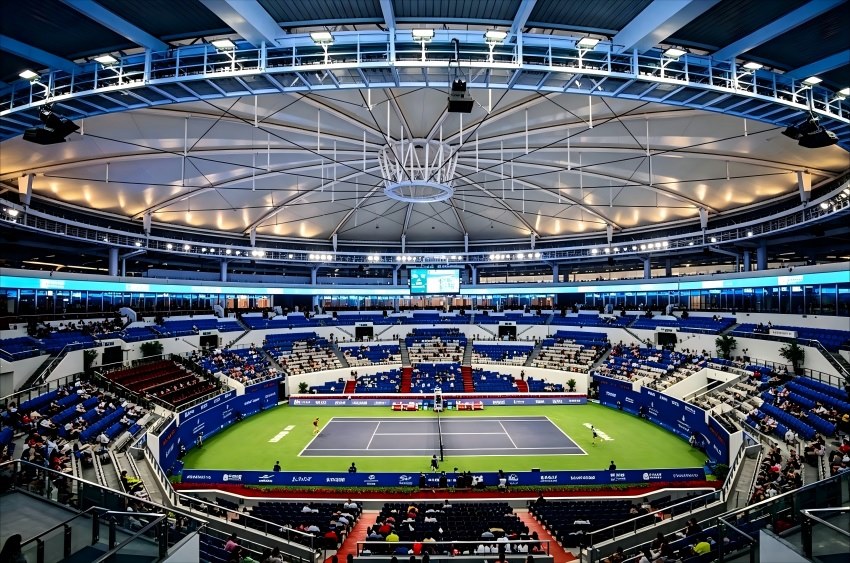
5.3 Catwalk Layout (Top Mounted Channel Layout)
Install lamps on the top catwalk bracket. Features: Easy maintenance, flexible angle adjustment, widely used in standard professional tennis venues.
1.Outdoor courts prioritize bilateral long-axis multi-pole layout + 12m height for formal competition standard.
2.Indoor courts must avoid overhead PPA lighting to eliminate overhead glare.
3.Professional match courts must strictly control uniformity ≤1.3 and color rendering Ra≥80.
4.All stadium projects must match anti-glare optical lamps to ensure stable high-speed ball vision.
Q1: What is the minimum pole height for an outdoor competition tennis court?
A1: Formal match outdoor tennis courts require a minimum pole height of 12m. Recreational training courts can use 8m poles at the lowest. Lower poles will produce severe glare and affect players tracking overhead tennis balls.
Q2: Can I install light poles between two adjacent tennis courts?
A2: Not recommended. Lights between courts will cause cross light interference, mutual glare, and uneven illumination on both courts. Poles should only be arranged on the outer sides of the whole venue area.
Q3: Why cannot we install lamps directly above the PPA playing area of indoor tennis courts?
A3: Lamps over PPA will form strong vertical glare. Tennis moves fast at high altitude, and direct light above the field blocks players’ line of sight to judge ball rotation and trajectory. All lamps must be placed outside the core playing zone.
Q4: What color rendering index Ra is required for professional TV broadcast tennis matches?
A4: For national live TV tournaments, Ra ≥80; for international top-level broadcast events, Ra ≥90, with color temperature controlled between 4000K–5500K neutral white light.
Q5: What’s the standard uniformity limit for professional competition tennis courts under CIE 42?
A5: The ratio of average illuminance to minimum illuminance shall not exceed 1.3. Training and entertainment courts allow a looser limit of ≤1.5.
Q6: Is natural daylight allowed for official indoor tennis competitions?
A6: No. Natural light is only suitable for daily fitness and basic training. Uneven sunlight, shadow differences and strong light contrast will interfere with competition fairness and athletes’ vision.
Q7: How to eliminate disabling glare on outdoor tennis courts?
A7: Three solutions: 1. Adopt professional cut-off anti-glare tennis floodlights with narrow beam angles; 2. Precisely adjust lamp aiming points to focus light inside the boundary; 3. Equip lamps with anti-glare baffles to block stray light overflow outside the court.
Q8: What are the three mainstream indoor tennis court lighting layout modes?
A8: Group cluster ceiling layout, single side row layout, and top catwalk mounting layout. Catwalk layout is the most convenient for later lamp maintenance and angle adjustment.
Q9: How much margin space needs to be reserved around a standard tennis court for lighting design?
A9: Reserve 6–8m space behind the two baselines, and 3.65–4m space outside both sidelines. Sufficient margin ensures full light coverage without dark corners.
Q10: How many light poles should be arranged on each long side of a professional outdoor tennis court?
A10: Ordinary recreation: 2 poles per side; amateur training matches: 3 poles per side; international professional competition venues: 4 poles per side.
HRLUXSOLAR focuses on mid-to-high-end outdoor lighting with strict quality standards and a rigorous, responsible team. We take quality as the core and professionalism as the foundation to provide stable and durable outdoor lighting products.We specialize in professional services for municipal and commercial engineering projects, delivering customized lighting solutions for smooth project implementation. We support flexible customization, efficient delivery and full-process technical support to meet diverse project demands.Committed to being your trusted outdoor lighting partner, HRLUXSOLAR keeps improving to create better lighting value for your projects.
Need a Dialux simulation for your project? Click here for a free lighting plan.
Get a Quote
Scan to Wechat/Whatsapp :