HRLUX Lighting | Light the Globe, Power the Future


HRLUX Lighting | Light the Globe, Power the Future
Choosing the right color temperature for LED street lights is not only about how a road looks at night. It affects visibility, comfort, perceived safety, glare control, environmental impact, and how well the lighting fits the surrounding area. In most road lighting projects, 3000K and 4000K stand out because they offer a practical balance between visual clarity, energy performance, and nighttime comfort.
You choose the color temperature of LED street lights by matching the lighting environment to the road function, user needs, surrounding land use, and local lighting standards. A busy arterial road may need a different visual effect from a residential street, park path, bridge, industrial road, or commercial district. The goal is not to select the “brightest-looking” option, but to choose a color temperature range that supports safe movement without creating unnecessary glare or visual discomfort.
Color temperature is measured in Kelvin, often written as K. Lower values look warmer and more yellow, while higher values look cooler and more bluish-white. For outdoor public lighting, common choices include 2700K, 3000K, 4000K, and sometimes 5000K, though many modern projects now avoid very cool street light colors unless there is a specific reason to use them.
A practical selection process usually considers:
Road type and speed Faster roads generally need clear object recognition, good contrast, and consistent illumination. A neutral white option such as 4000K is often considered suitable where visibility and driver reaction are priorities.
Pedestrian comfort Residential streets, sidewalks, campuses, parks, and mixed-use areas often benefit from warmer tones. A 3000K LED street light can feel calmer and less harsh while still providing good nighttime visibility.
Glare sensitivity The cooler the light appears, the more visually sharp or intense it may feel, especially if the luminaire is poorly shielded. Optics, mounting height, and beam angle matter as much as color temperature.
Environmental context Areas near homes, natural landscapes, waterfronts, or wildlife-sensitive zones may call for warmer LED lighting options to reduce visual disturbance and limit excessive blue-rich light.
Existing lighting network If a city already uses 3000K or 4000K, matching that tone helps maintain a consistent nightscape and avoids a patchwork of different street light colors.
Color temperature describes the appearance of white light, but it does not tell the whole story. Two LED products can both be labeled 4000K and still look slightly different because their led light spectrum, color rendering, optical design, and phosphor technology may vary. That is why professional lighting decisions should look beyond the Kelvin number alone.
A warmer LED, such as 3000K, usually contains less visible blue emphasis and creates a softer amber-white appearance. A 4000K LED typically appears more neutral, with a cleaner white tone that can improve visual sharpness on road surfaces and around moving objects. Higher color temperatures, such as 5000K and above, may look bright and crisp at first glance, but they can also feel harsh in pedestrian spaces or residential environments.
When evaluating the led light spectrum, pay attention to how the light performs in real conditions. Wet pavement, asphalt color, lane markings, signs, trees, building façades, and vehicle headlights all affect how people perceive the road. A well-designed 3000K system can outperform a poorly designed 5000K system if it has better optics, uniformity, glare control, and placement.
In short, color temperature is a key specification, but it should work together with luminaire quality, distribution pattern, lumen output, mounting design, and control strategy.
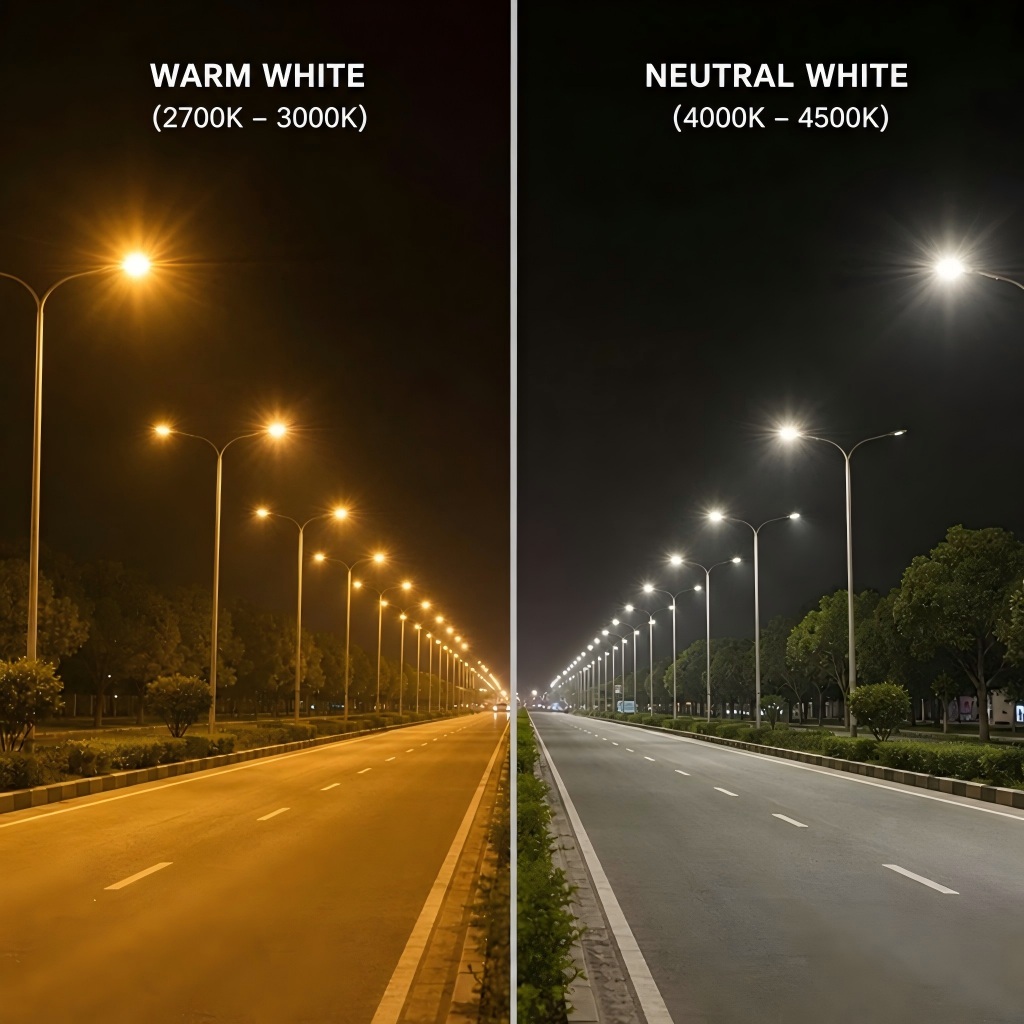
Road lighting standards often prefer 3000K and 4000K because these options sit in a practical middle ground. They provide enough visual clarity for drivers and pedestrians while helping reduce the harshness, glare, and environmental concerns associated with cooler, blue-heavy light. This is why the question “How to Choose the Color Temperature of LED Street Lights? Why Do Road Lighting Standards Prefer 3000K and 4000K?” usually leads back to balance rather than one universal answer.
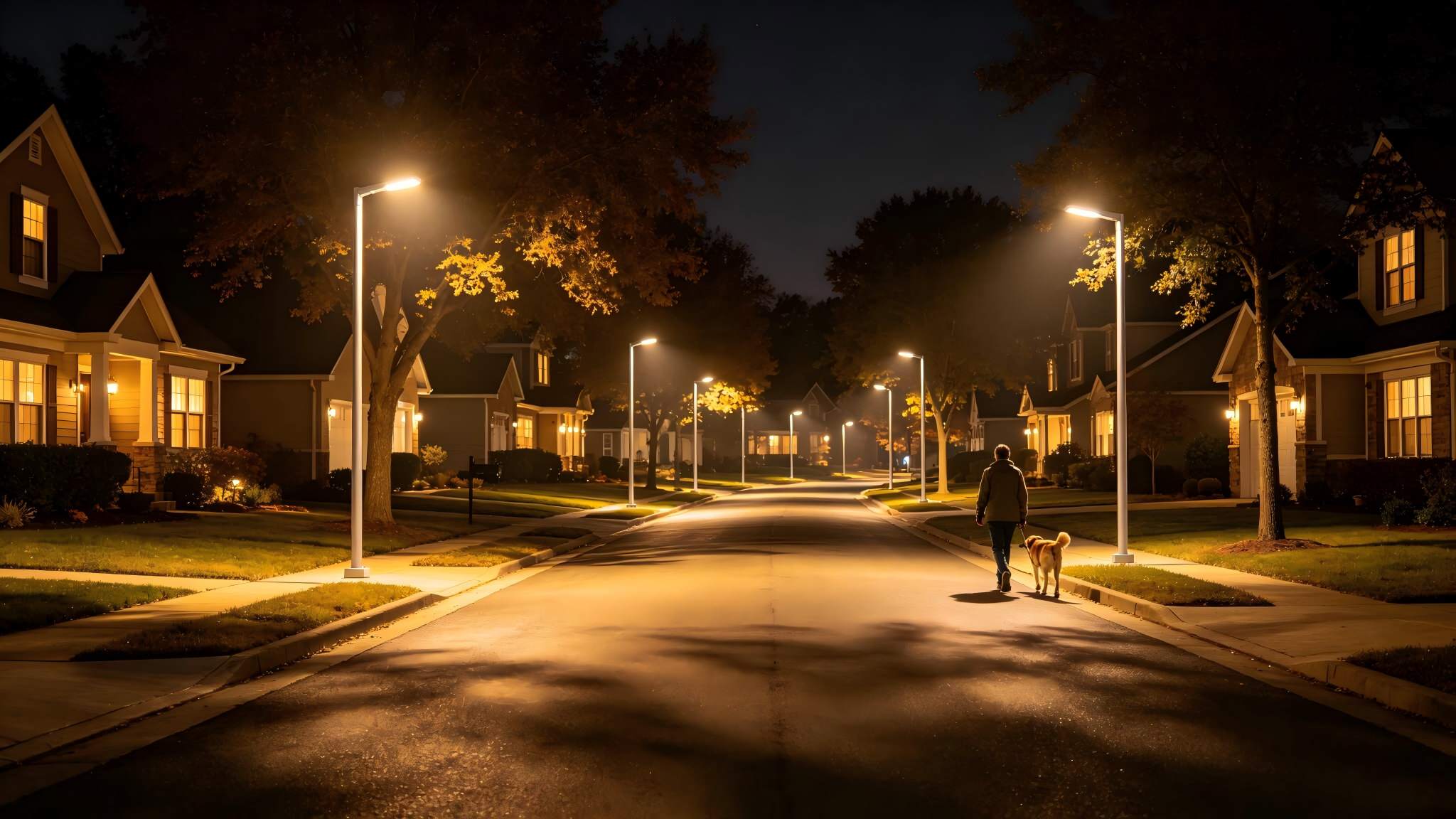
A 3000K street light gives a warm white appearance that is especially useful in people-centered spaces. It supports a comfortable nighttime atmosphere and is commonly considered appropriate for residential roads, pedestrian streets, scenic areas, parks, and community spaces. It can help a street feel safer and more welcoming without making the lighting feel overly clinical.
A 4000K street light offers a neutral white appearance that can support stronger visual contrast. It is often selected for main roads, intersections, commercial areas, parking areas, logistics zones, and places where task visibility is more important. The light feels clearer than 3000K but is usually less severe than very cool white options.
The preference for 3000K and 4000K also reflects the broader shift in public lighting design. Older lighting decisions often focused mainly on brightness and energy savings. Modern projects look more carefully at human comfort, neighborhood character, ecological impact, nighttime identity, and long-term maintenance.
No single CCT fits every project. The best choice depends on what the road is for, who uses it, and how the surrounding area should feel after dark. Use the following guidance as a practical starting point when comparing led lighting options.
Residential streets and neighborhoods
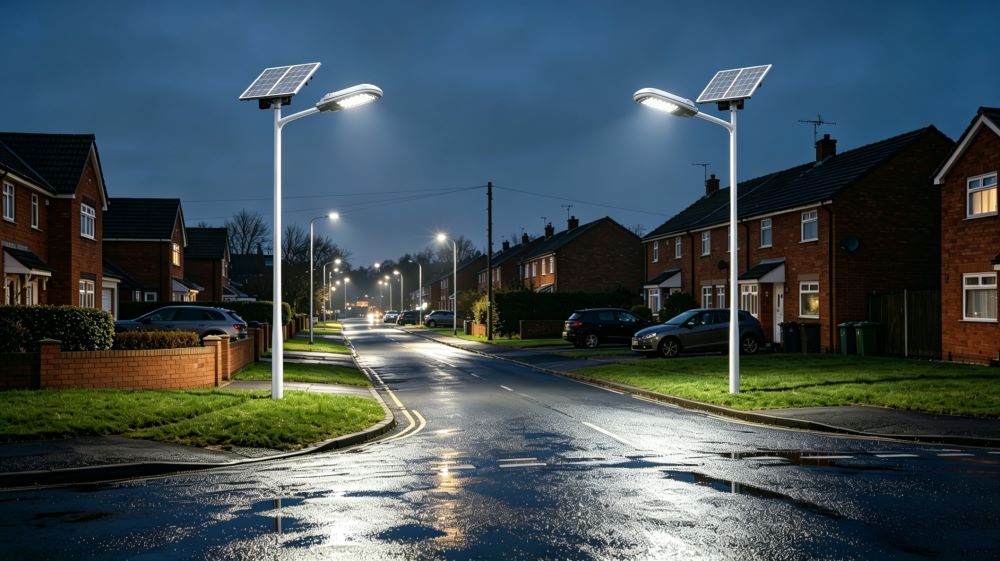
For residential streets, 3000K is often a strong choice because it creates a warmer and less intrusive nighttime environment. People are not only driving through these areas; they are sleeping, walking dogs, cycling, arriving home, and looking out from windows. A softer tone can reduce the sense of harshness while still supporting safe movement.
Good shielding is especially important in neighborhoods. Even a warm light can become uncomfortable if it shines directly into homes or creates bright spots under poles. For residential projects, combine 3000K with careful optical control, appropriate pole spacing, and dimming where suitable.
Urban roads and commercial districts
For commercial streets, downtown corridors, and urban roads with mixed traffic, both 3000K and 4000K can work well. A 3000K system may be preferred where the goal is a relaxed, pedestrian-friendly atmosphere. A 4000K system may be better where traffic flow, storefront visibility, and object recognition are higher priorities.
Consistency matters in these areas. If one block uses warm white and the next uses cool white, the visual experience can feel disjointed. A planned color temperature range helps create a cleaner and more intentional city image.
Main roads, intersections, and transport routes
Main roads and intersections often benefit from 4000K because neutral white light can make lane edges, pedestrians, vehicles, and obstacles easier to distinguish. However, the lighting should still be controlled to prevent glare for drivers. Brightness without visual comfort can reduce performance instead of improving it.
For high-conflict areas, color temperature should be considered alongside uniformity and vertical illumination. Drivers need to detect people and objects early, not simply see a bright road surface. That means the full lighting design matters more than the Kelvin rating alone.
Parks, scenic roads, and environmentally sensitive areas
In parks, waterfronts, scenic routes, and wildlife-sensitive locations, warmer street light colors are usually more appropriate. A 3000K option, or even warmer where permitted and technically suitable, can help preserve a calmer nighttime setting. It also reduces the visual contrast between the lit path and the surrounding darkness.
Designers should avoid over-lighting these spaces. Lower mounting heights, precise beam distribution, motion controls, and reduced spill light can make the lighting more respectful of both people and the environment.
Before finalizing a color temperature, review the full lighting plan rather than approving a specification based only on Kelvin. The checklist below can help keep the decision practical and performance-focused.
Confirm the road classification. Identify whether the area is residential, commercial, arterial, pedestrian-focused, industrial, or scenic.
Review local standards and project requirements. Follow applicable road lighting guidance, municipal preferences, and environmental rules.
Compare 3000K and 4000K mockups when possible. Field tests are often more useful than catalog images because pavement, pole height, and surroundings affect perception.
Check glare control. Look at shielding, lens design, beam angle, and mounting position.
Evaluate uniformity. Avoid bright pools of light followed by dark gaps, which can make roads feel less comfortable and less safe.
Consider nearby residents. Reduce light trespass into windows, balconies, gardens, and upper floors.
Assess color rendering needs. Better color recognition can help pedestrians, cyclists, drivers, and security cameras interpret the scene more clearly.
Plan for controls. Dimming, adaptive lighting, timers, and smart controls can reduce unnecessary light output during low-traffic hours.
Keep the network consistent. Choose a color temperature range that fits nearby streets and long-term maintenance plans.
One common mistake is assuming that a higher color temperature always means better visibility. Cool white light can appear brighter to the eye, but that does not automatically mean the road is safer or more comfortable. If glare increases, visual performance may actually suffer.
Another mistake is treating all LED street lights with the same Kelvin rating as equal. Product quality, optical design, heat management, lumen maintenance, color consistency, and installation angle all affect real-world performance. A reliable 3000K or 4000K fixture with good distribution is usually more valuable than a poorly controlled fixture with impressive numbers on paper.
It is also risky to choose color temperature without considering the surrounding community. Residents may object to lights that feel too cold, too bright, or too intrusive. Early planning, pilot installations, and clear communication can prevent costly changes after installation.
Finally, avoid mixing too many street light colors within one visible area. Some variation may be unavoidable during retrofit projects, but a consistent plan creates a more professional and comfortable nighttime environment.
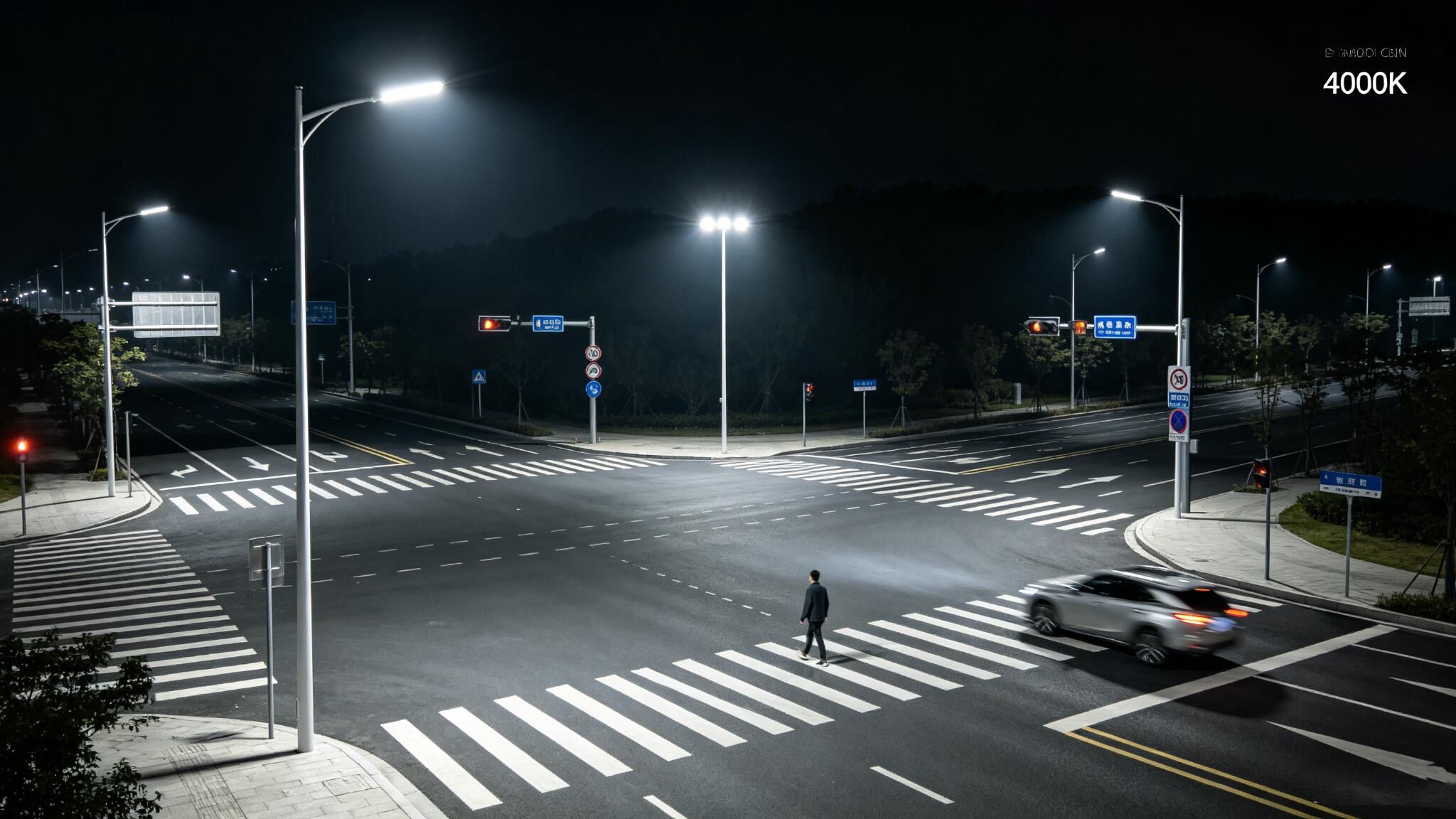
For most LED street lighting projects, 3000K and 4000K are the most practical starting points. Choose 3000K when visual comfort, residential friendliness, and a warmer atmosphere are priorities. Choose 4000K when clearer task visibility, traffic recognition, and a neutral urban appearance are more important.
The best answer is rarely based on color temperature alone. A successful street lighting design combines the right CCT with proper optics, suitable brightness, good uniformity, low glare, durable fixtures, and smart control options. When these elements work together, LED street lights can improve nighttime visibility while respecting the character of the road and the people who use it.
If you are comparing led lighting options, begin with the environment, not the catalog. Define how the space should function after dark, then select the color temperature range that supports that purpose. In many cases, that careful process will lead naturally to 3000K or 4000K—the two balanced choices that continue to shape modern road lighting design.
Q1. Why do road lighting standards prefer 3000K and 4000K?
These color temperatures offer a practical balance between visual clarity and nighttime comfort. 3000K provides a warmer, more residential-friendly light, while 4000K gives a neutral white that improves contrast on main roads and intersections—without the harshness of cooler, blue-heavy options.
Q2. How do I choose between 3000K and 4000K for a street lighting project?
Consider the road type and users. Choose 3000K for residential streets, parks, and pedestrian areas where comfort matters most. Choose 4000K for arterials, commercial districts, and high-traffic zones where clearer object recognition and visual sharpness are priorities.
Q3. Does a higher color temperature always improve visibility?
Not necessarily. Cooler light may feel brighter, but if glare increases or optics are poor, visual performance can actually worsen. Proper beam control, uniformity, and shielding matter as much as the Kelvin rating.
Q4. What common mistakes should be avoided when selecting street light color temperature?
Avoid choosing based only on Kelvin, mixing too many color temperatures in one area, ignoring glare control, and overlooking community impact. Field testing both 3000K and 4000K options in the actual environment is the best way to confirm the right choice.
HRLUXSOLAR focuses on mid-to-high-end outdoor lighting with strict quality standards and a rigorous, responsible team. We take quality as the core and professionalism as the foundation to provide stable and durable outdoor lighting products.We specialize in professional services for municipal and commercial engineering projects, delivering customized lighting solutions for smooth project implementation. We support flexible customization, efficient delivery and full-process technical support to meet diverse project demands.Committed to being your trusted outdoor lighting partner, HRLUXSOLAR keeps improving to create better lighting value for your projects.
Get a Quote
Scan to Wechat/Whatsapp :