
HRLUX Lighting | Light the Globe, Power the Future


HRLUX Lighting | Light the Globe, Power the Future
A solar street light can keep working through rainy weather only when its battery, solar panel, LED load, controller, and local sunlight conditions are designed as one complete system. In simple terms, rainy-day performance depends on how much energy the light uses each night, how much solar energy storage is available, and how quickly the panel can recharge the battery when sunlight returns. That is the practical answer behind How Many Rainy Days Can a Solar Street Light Last? — The Science of Matching Battery Capacity and Solar Panels: it is not a guess, but a balance between energy use and energy supply.
Most solar street lights are designed around a target number of backup days, often called autonomy days. This means the light should continue operating for a planned period when solar charging is weak because of rain, clouds, storms, or seasonal weather. The actual number depends on solar battery capacity, solar panel capacity, LED wattage, lighting hours, dimming settings, battery health, and the amount of sunlight available before and after the rainy period.
A light with a small battery and high nightly power demand may struggle after one or two cloudy nights. A well-designed solar lighting system with efficient LEDs, intelligent dimming, a correctly sized street light battery, and enough panel output can last much longer. The goal is not simply to install the largest battery possible. The goal is to match every component so the system stores enough energy, uses it carefully, and recovers quickly.
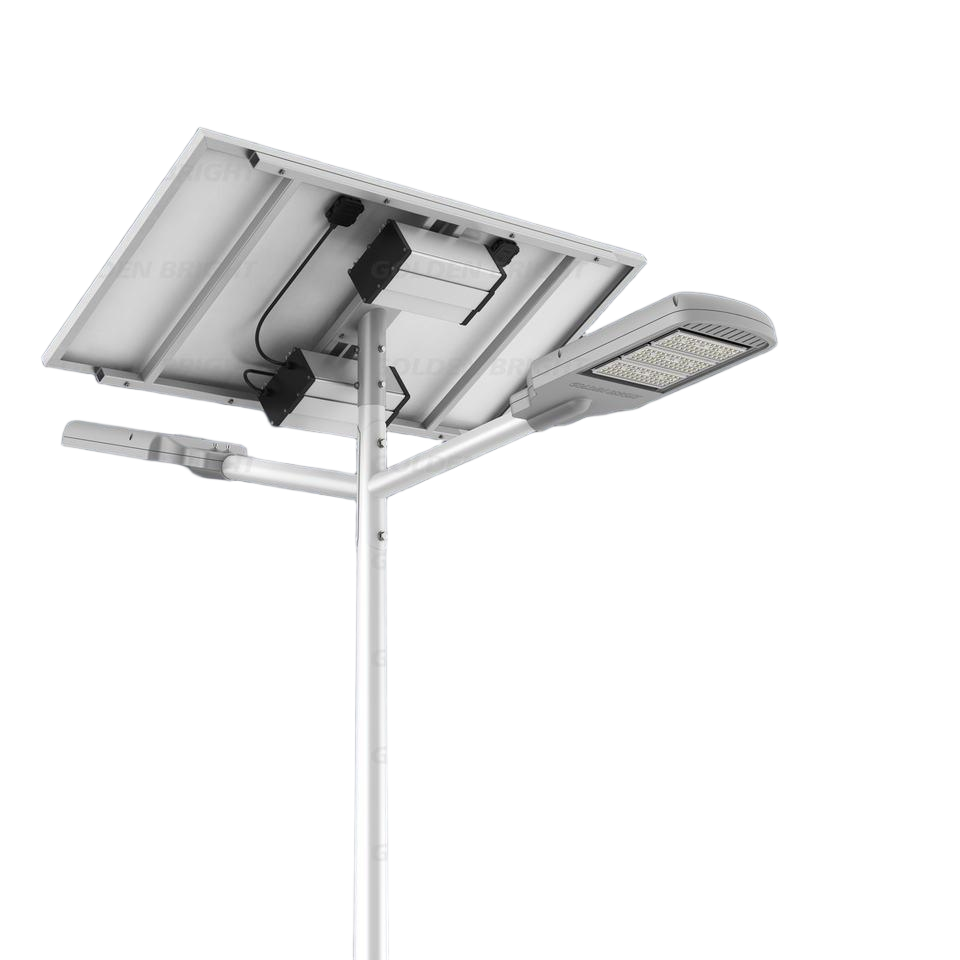
A solar street light works like a small independent power station. During the day, the solar panel converts sunlight into electricity. That energy is managed by a charge controller and stored in the battery. At night, the battery powers the LED fixture according to the programmed lighting schedule.
Rainy days create two challenges at the same time. First, the panel produces less electricity because clouds reduce available sunlight. Second, the light still needs to operate through the night. If this imbalance continues for several days, the battery gradually discharges.
The basic design question is therefore straightforward: does the system store enough usable energy to cover the load until charging improves? To answer that, designers look at three connected values:
Daily energy consumption: how much electricity the LED uses each night.
Usable battery capacity: how much stored energy can safely be drawn from the battery.
Daily charging potential: how much energy the solar panel can realistically generate in local conditions.
When those values are aligned, the solar light power stays stable even during poor weather. When they are mismatched, the light may dim early, shut off before morning, or experience shortened battery life.
Solar battery capacity is often expressed in watt-hours or amp-hours, but the label alone does not tell the whole story. What matters most is usable capacity: the amount of energy the system can actually use without damaging the battery or triggering low-voltage protection.
For example, a battery may have a rated capacity, but the controller may reserve part of that capacity to protect the battery from deep discharge. Temperature can also affect battery performance, especially in very cold or very hot environments. Over time, every battery gradually loses capacity, so a system designed with no margin may perform well at first but struggle later.
A practical battery plan should consider:
Nightly LED energy demand: higher wattage and longer lighting hours require more storage.
Depth of discharge limits: batteries last longer when they are not repeatedly drained too deeply.
Battery chemistry: different battery types tolerate cycling, heat, and discharge differently.
Local climate: cold, heat, and long rainy seasons can reduce real-world performance.
Aging allowance: a small design margin helps maintain reliability as the battery gets older.
This is why the best street light battery is not automatically the biggest one. It is the one correctly sized for the load, locati0n, charging source, and service expectations.
If the battery is the energy reserve, the solar panel is the recovery engine. Solar panel capacity determines how much power the system can collect when sunlight is available. A larger or better-positioned panel can recharge the battery faster after cloudy weather, while an undersized panel may leave the battery partially depleted for days.
This is especially important in areas with frequent rain. If the solar panel only barely covers normal daily use in ideal weather, it may not restore the battery after several weak-charging days. The result is a system that seems acceptable during sunny periods but becomes unreliable during seasonal storms.
Good solar panel sizing considers:
Peak sun hours in the installation area. A locati0n with fewer effective sun hours needs more panel capacity for the same lighting load.
Panel angle and orientation. A poorly positioned panel can reduce charging even when the panel itself is adequately rated.
Shading from trees, buildings, poles, or signs. Partial shading can sharply reduce solar energy production.
Dust, leaves, snow, or bird droppings. Surface blockage lowers charging and should be included in maintenance planning.
Seasonal variation. A system that works in summer may need extra capacity for winter or rainy-season performance.
In other words, solar panel capacity is not only about keeping the light on tonight. It is also about restoring the battery fast enough for the next night and the next rainy period.
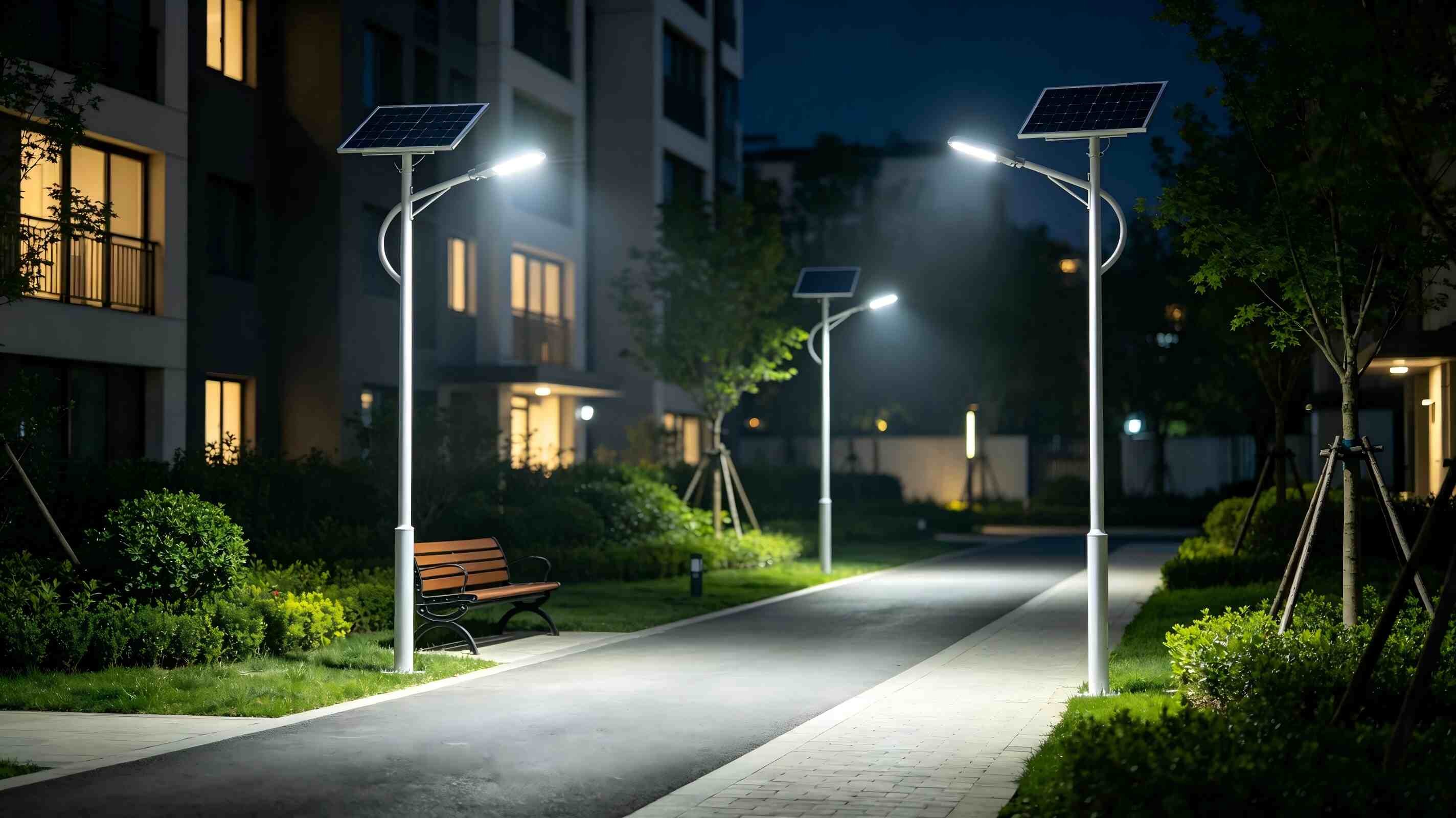
The right match starts by calculating how much energy the light needs, then sizing the battery for backup days and the panel for reliable recharge. This process turns the broad question of rainy-day backup into a practical design method. It also prevents two common mistakes: installing a battery that is too small for the load, or installing a panel that is too weak to keep that battery charged.
A simplified sizing process looks like this:
Estimate nightly energy use. Multiply LED power by operating hours, then account for dimming schedules if the system uses smart control.
Choose the required rainy-day backup. Decide how many low-sun days the light must survive based on local climate and safety needs.
Calculate required usable storage. Multiply nightly energy use by backup days, then add a margin for battery protection and aging.
Select suitable battery capacity. Choose a battery that can provide the required usable energy within safe discharge limits.
Size the solar panel for daily recharge. The panel should cover normal nightly use and help recover energy lost during cloudy periods.
Verify the controller rating. The controller must safely manage the panel current, battery charging, and LED output.
Review the physical installation. Panel tilt, shade, pole height, cable loss, and ventilation all affect real performance.
This approach makes a solar lighting system more predictable. Instead of asking whether a product can survive “rainy days” in general, you define the load, the locati0n, and the desired autonomy. Then each component has a clear job.
Modern solar street lights often use control strategies that reduce energy consumption without leaving the area dark. This can make a major difference during rainy weather because every saved watt-hour extends available backup time.
Common energy-saving features include motion sensing, time-based dimming, adaptive brightness, and low-battery protection. For example, a light might run at higher brightness during early evening activity, dim late at night, and brighten again when motion is detected. This lowers average solar light power demand while still supporting visibility and safety.
Smart controls are most useful when they are planned around the locati0n. A quiet pathway may benefit from deeper dimming during low-traffic hours. A busy road, entrance, or public area may need more consistent brightness. The key is to save energy where it does not compromise the purpose of the light.
Rainy-day performance is built into the system before installation. Once the light is in the field, it can only perform within the limits of its battery, panel, controller, and placement. Careful planning helps avoid unnecessary outages and maintenance calls.
Use this checklist when evaluating a solar street light project:
Define the lighting requirement first. Do not begin with battery size. Start with the brightness level, operating hours, and safety purpose.
Use realistic weather assumptions. Design around local rainy seasons, not just average sunny conditions.
Avoid shaded panel locations. Even a strong battery cannot compensate forever for poor charging.
Allow room for battery aging. A system with no reserve may become unreliable as capacity declines.
Match all electrical components. The panel, battery, controller, and LED load should be compatible.
Plan for maintenance access. Panels may need cleaning, and batteries may eventually need replacement.
Choose intelligent dimming when appropriate. Reducing unnecessary consumption is often more efficient than oversizing every component.
The most reliable systems are not necessarily the most expensive or the most powerful. They are the systems designed around real use conditions.
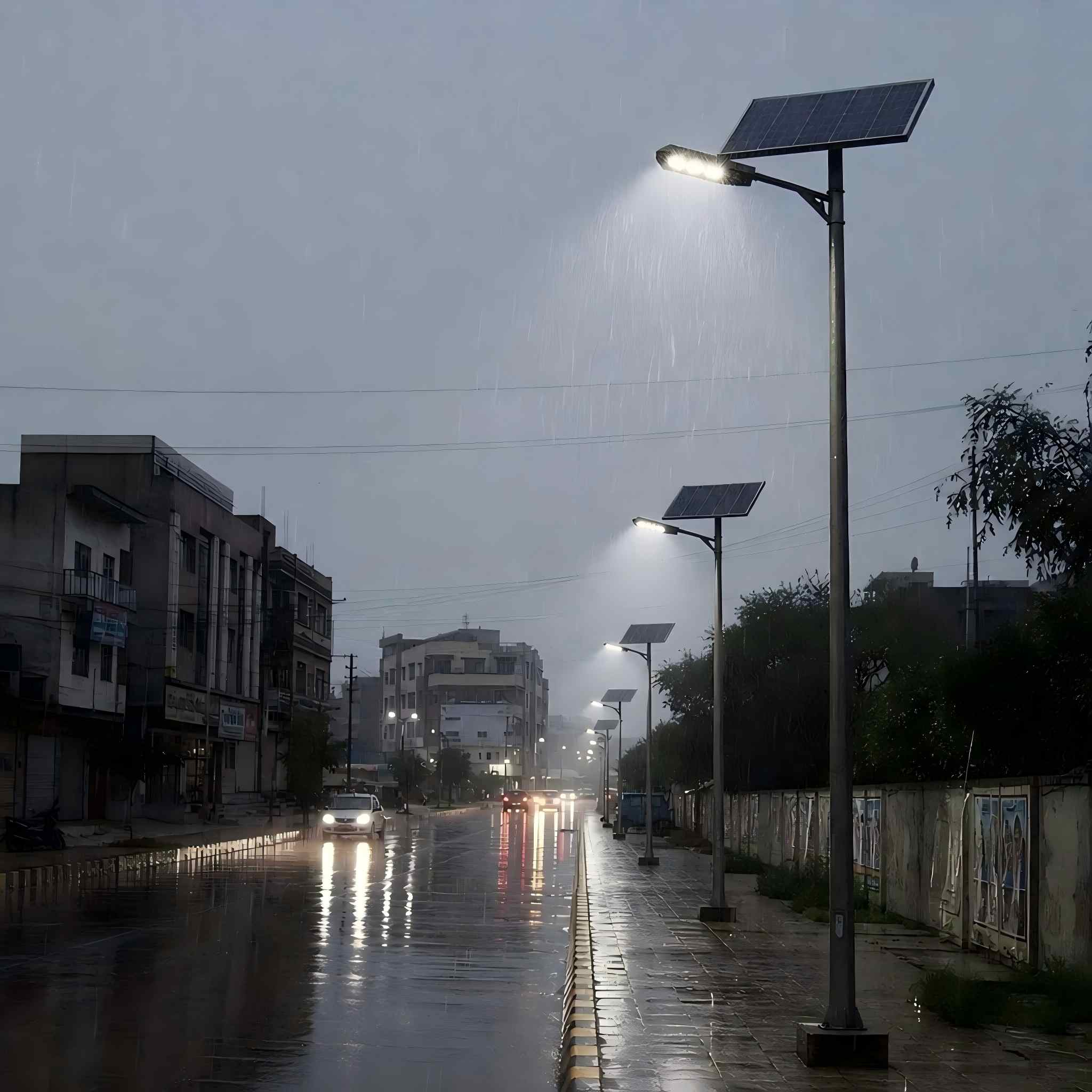
A solar street light that fails during rainy weather is often showing signs of an energy mismatch. The problem may not be the LED itself. It may be that the battery cannot store enough energy, the panel cannot recharge it quickly enough, or the control settings are consuming too much power.
Warning signs include lights turning off before dawn, brightness dropping sharply after cloudy days, batteries needing frequent replacement, or lights working well in summer but poorly in rainy or winter seasons. Another sign is slow recovery: the light remains weak for several nights even after sunshine returns.
When troubleshooting, it helps to check the full system rather than replacing parts one by one. Review the solar panel condition, shading, wiring, controller settings, battery voltage, and nightly operating profile. A small change, such as clearing shade or adjusting dimming hours, may improve performance. In other cases, the system may need a larger battery, higher solar panel capacity, or a lower-power LED fixture.
The real science of rainy-day backup is energy management. A solar street light lasts through rain when the stored energy is sufficient, the nightly load is controlled, and the panel can replace what the system uses. Battery capacity provides endurance, solar panel capacity provides recovery, and smart control helps stretch both.
So, How Many Rainy Days Can a Solar Street Light Last? — The Science of Matching Battery Capacity and Solar Panels is ultimately a design question, not a fixed product claim. Before choosing a solar lighting system, define the local weather conditions, required lighting hours, LED power, desired backup days, and installation environment. When those details guide the design, the result is a more dependable light that performs when the weather is least cooperative.
Q1. How many rainy days can a solar street light last?
There is no fixed number—it depends on the balance between nightly energy use, usable battery capacity, and solar panel recharge ability. A well-matched system can typically last several cloudy days, while a mismatched one may fail after one or two.
Q2. How do you correctly match battery capacity and solar panel size?
First calculate nightly energy consumption, then size the battery for the desired number of backup days with a safety margin. Size the solar panel to fully recharge the battery during available sunlight, considering local weather and shading.
Q3. How do smart controls help during rainy weather?
Motion sensing, time-based dimming, and adaptive brightness reduce average energy consumption, allowing the stored battery power to last longer without leaving the area completely dark.
Q4. What are signs of a mismatched solar lighting system?
Lights turning off before dawn, sharp brightness drops after cloudy days, slow recovery after sunshine returns, and frequent battery replacement all indicate the panel, battery, and LED load are not properly balanced.
HRLUXSOLAR focuses on mid-to-high-end outdoor lighting with strict quality standards and a rigorous, responsible team. We take quality as the core and professionalism as the foundation to provide stable and durable outdoor lighting products.We specialize in professional services for municipal and commercial engineering projects, delivering customized lighting solutions for smooth project implementation. We support flexible customization, efficient delivery and full-process technical support to meet diverse project demands.Committed to being your trusted outdoor lighting partner, HRLUXSOLAR keeps improving to create better lighting value for your projects.
Get a Quote
Scan to Wechat/Whatsapp :