HRLUX Lighting | Light the Globe, Power the Future


HRLUX Lighting | Light the Globe, Power the Future
Schools, community clubs and municipal sports parks are increasingly building one multi-use court that must serve football training, basketball and pickleball on the same surface. Lighting design for this kind of venue is not just about making it "bright enough" — each sport has different illuminance standards, uniformity requirements, vertical lighting needs and glare limits. A system designed only for football will make basketball players complain about shadows; a system optimized for pickleball may leave the football half too dark.
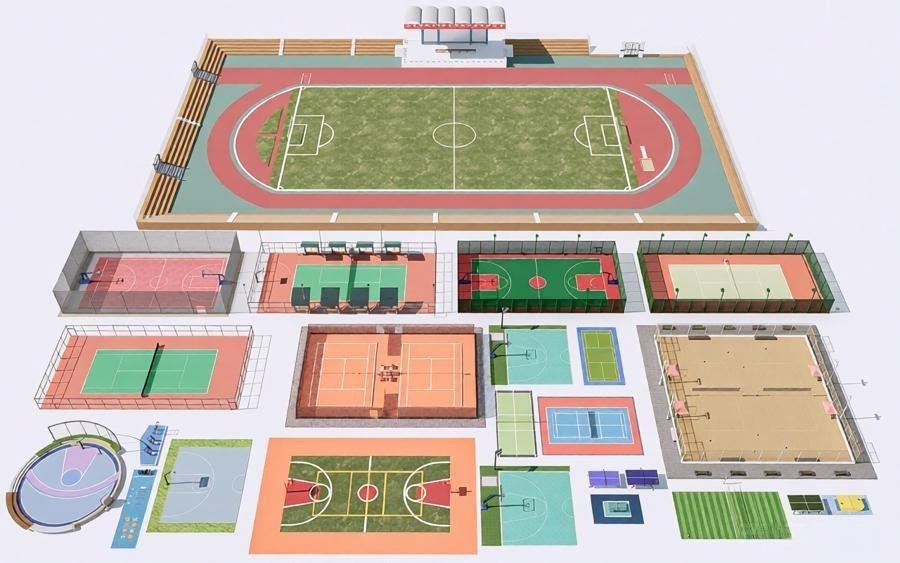
FIFA training areas require high horizontal and vertical illuminance because players run in all directions and the ball travels at speed. FIBA basketball emphasizes extreme uniformity (U1 < 0.6) so the ball never disappears in shadow. ITF/PPA pickleball rules restrict glare because slow spin and close net play make eye comfort critical. Designing to the strictest single standard wastes energy and budget; designing to the loosest leaves your venue failing user expectations.
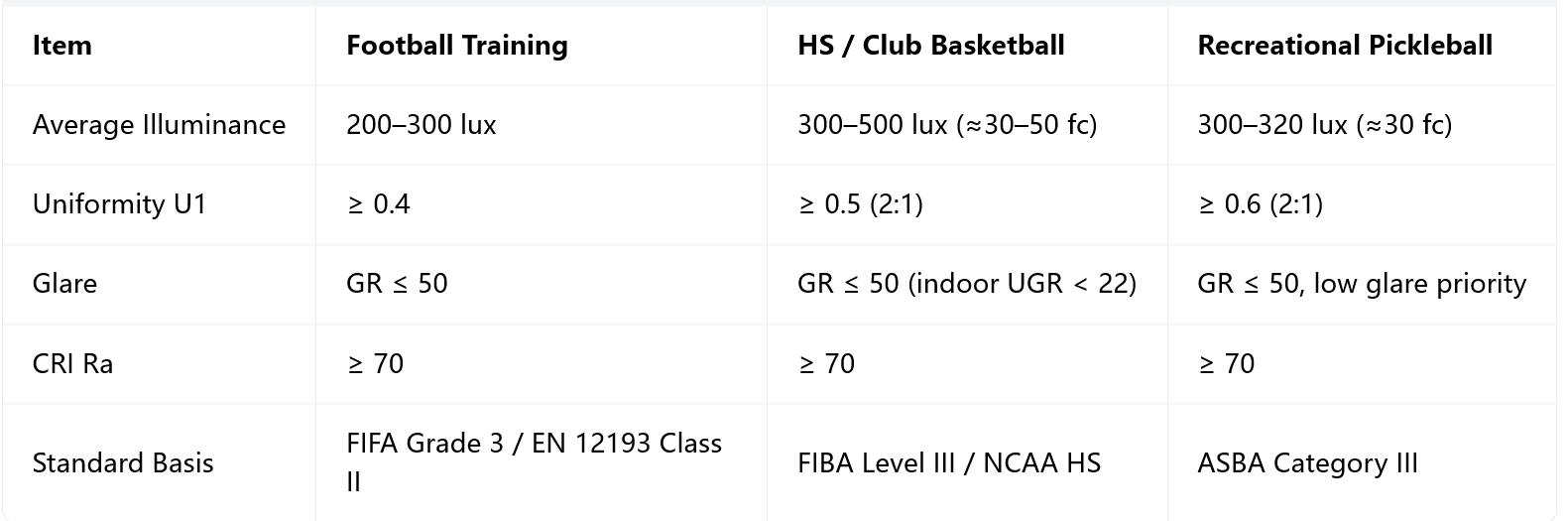
| Sport | Horizontal Illuminance (lux) | Uniformity U1 | Glare Limit | Special Requirement |
| Football training (FIFA Class IV/V) | 200 – 300 lux | ≥ 0.4 | Moderate | Vertical illuminance on goal area |
| Basketball (FIBA Class III) | 300 – 500 lux | ≥ 0.6 | Low | Uniformity across key and three-point line |
| Pickleball (PPA amateur) | 300 – 320 lux | ≥ 0.5 | Very low (GR ≤ 50) | Low glare, no direct line of sight to lamp |
| General recreation (EN 12193 Class III) | 75 – 200 lux | ≥ 0.4 | GR ≤ 55 | Safety-level uniformity |
When one court hosts all three, the design target is usually 200–300 lux average with U1 ≥ 0.5 and GR ≤ 50 — this satisfies football training, covers basketball amateur level, and keeps pickleball players comfortable.
4.1 Pole Positioning
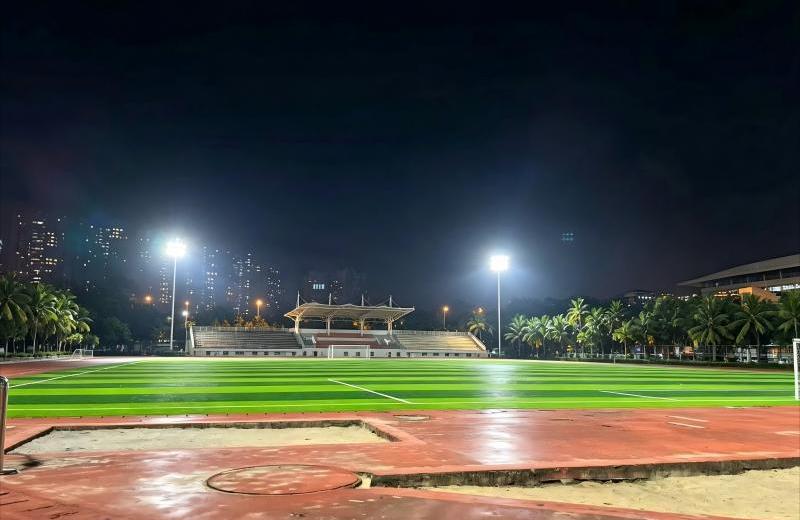
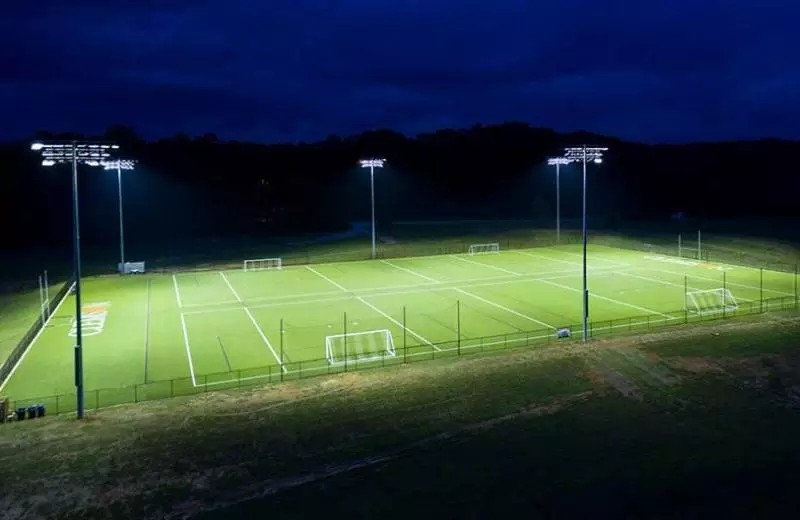
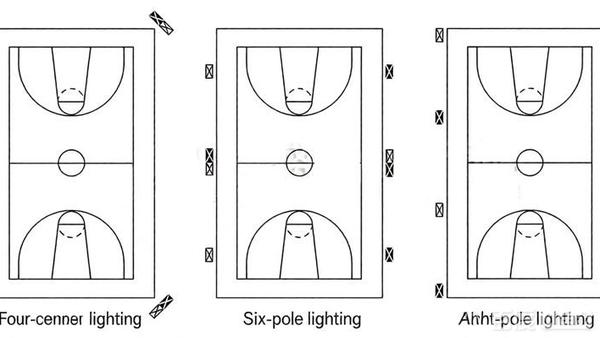
Four-pole corner mounting is the most cost-effective layout for a 40m × 20m multi-sport court. Poles should be placed outside the running perimeter, at least 3 meters from the sideline, to avoid ball impact and player collision. Pole height of 12–15 meters works best: low enough to keep glare under control, high enough to cover the center circle without dark corners.
4.2 Luminaire Power and Optics
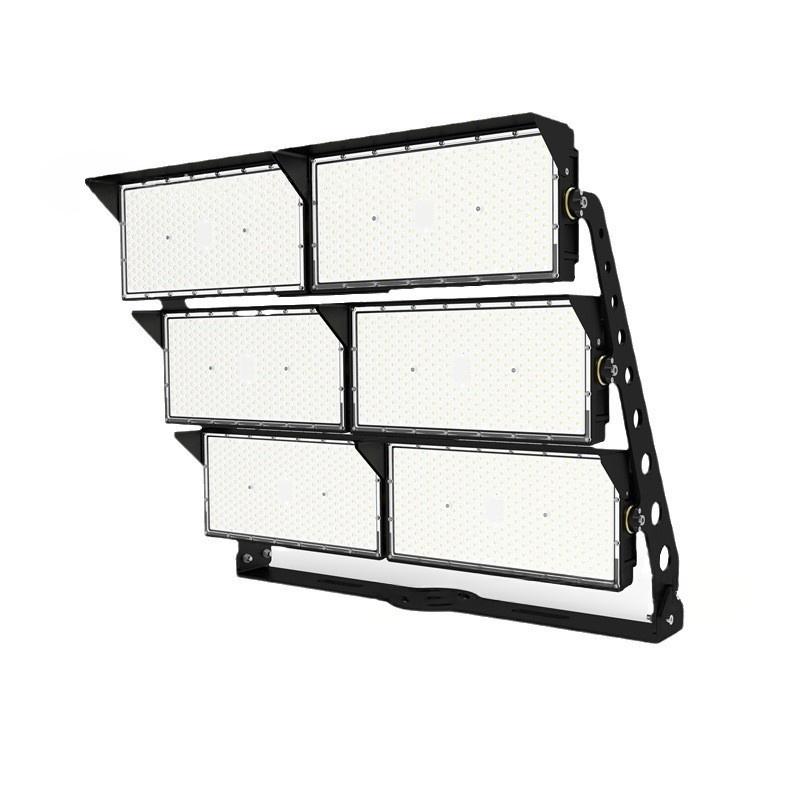
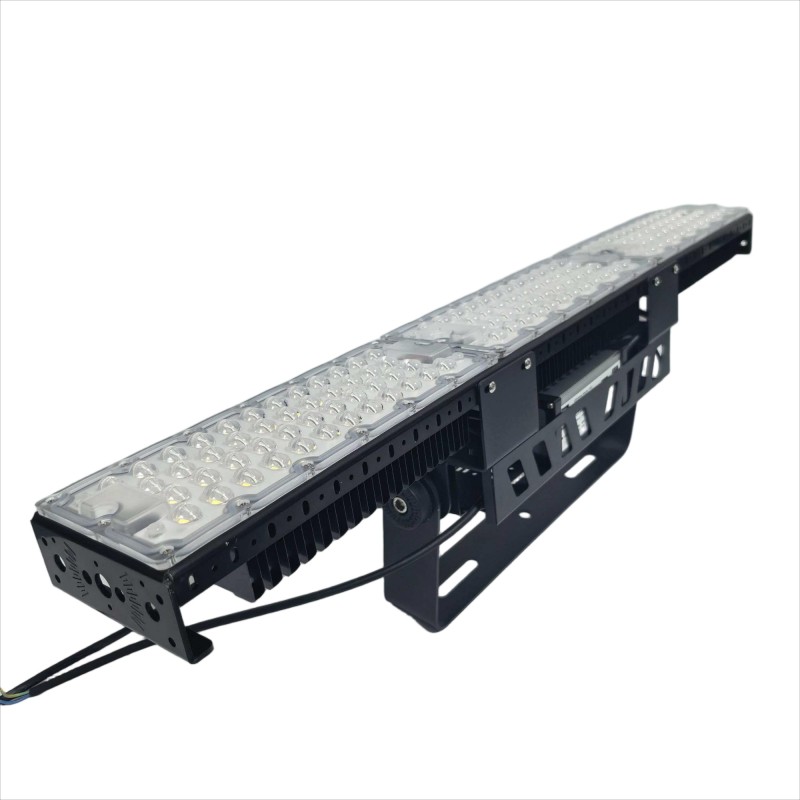
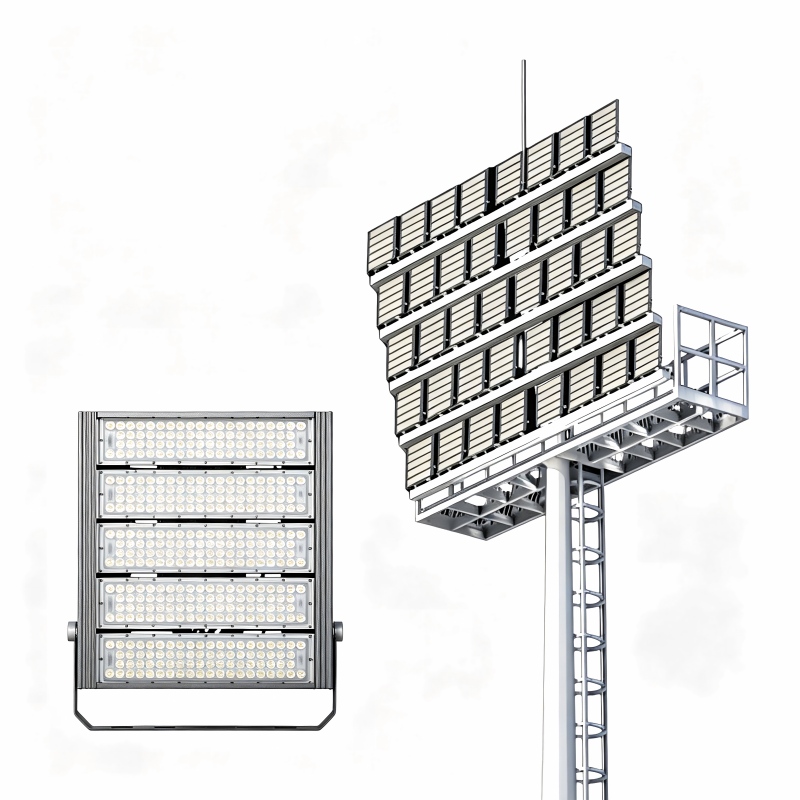
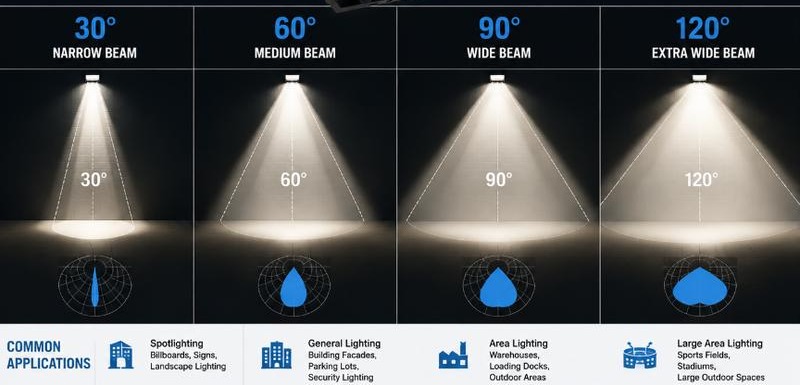
Use modular LED flood lights with interchangeable lens angles: narrow 15° × 60° for long-axis coverage, medium 60° for center fill. A typical four-pole layout uses 4 × 400W fixtures (1600W total) to reach 200–250 lux (EN 12193 Class III) on an 800 m² court. If your multi-sport venue needs 300 lux for amateur competition, upgrade to 6 × 250W or 4 × 600W. Choose fixtures with asymmetric optical design so light is thrown onto the court, not into neighbors' windows or players' eyes.
The smartest multi-sport installations use controller-based dimming: training mode (100% output, 300 lux) for football practice; evening recreational mode (70% output, ~220 lux) for casual basketball; low-demand mode (40% output, ~120 lux) for pickleball evening play. This single strategy cuts annual energy use by 35–50% while keeping every sport at acceptable quality.
Mounting poles too low: glare jumps, players cannot look up. Using symmetric lenses: light spills outside the court and into nearby housing. Over-lighting to 500 lux "just in case": energy waste and glare complaints. Ignoring vertical illuminance: football and basketball need facial/chest-level light, not just ground light. Skipping anti-glare louvers: pickleball players will refuse to play under bare LED lenses.
Q1: Can one lighting tower really serve three different sports?
A1:Yes, if you design to the middle standard (200–300 lux, U1 ≥ 0.5, GR ≤ 50) and use dimmable controllers. You will not reach professional football match standards, but for school training, community recreation and amateur pickleball tournaments, this single system works.
Q2: How tall should the poles be for a 40m × 20m court?
A2: 12 to 15 meters. Below 10 meters, glare and shadows become unacceptable; above 18 meters, you need more power to reach the ground and installation cost rises sharply.
Q3: Does pickleball really need lower glare than basketball?
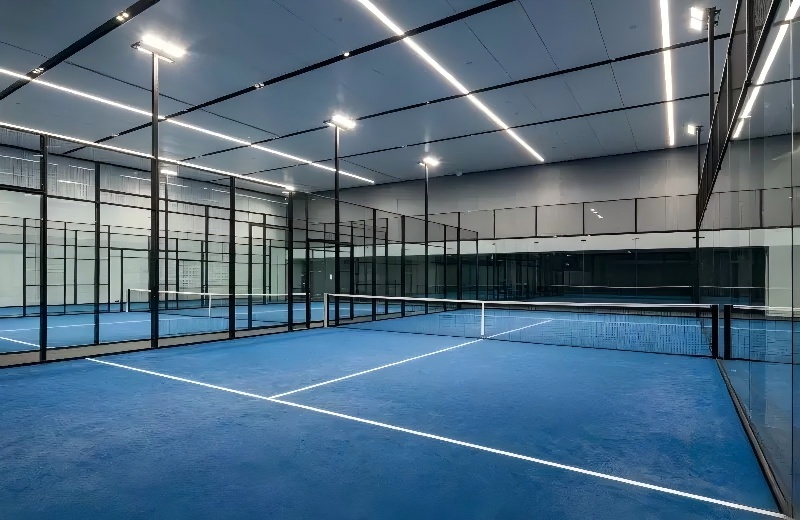
A3: Yes. Pickleball players stand 3–6 meters from the net and track slow spinning balls, so any direct lamp in their field of vision is immediately distracting. Basketball players move faster and look at the ball on the floor, so glare tolerance is higher. Our sports lighting product line includes anti-glare lens options built for this exact use case.
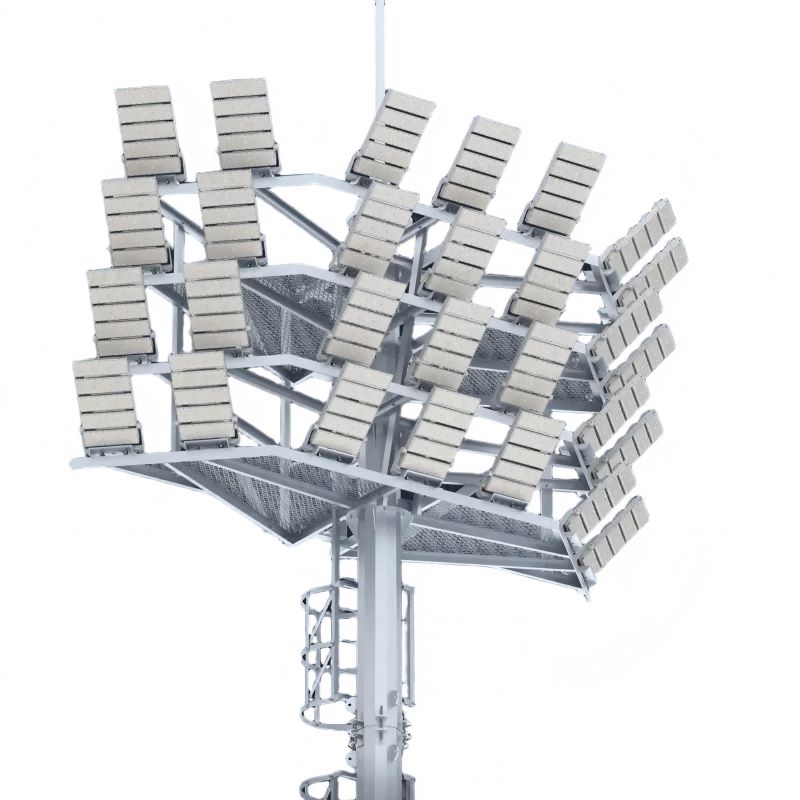
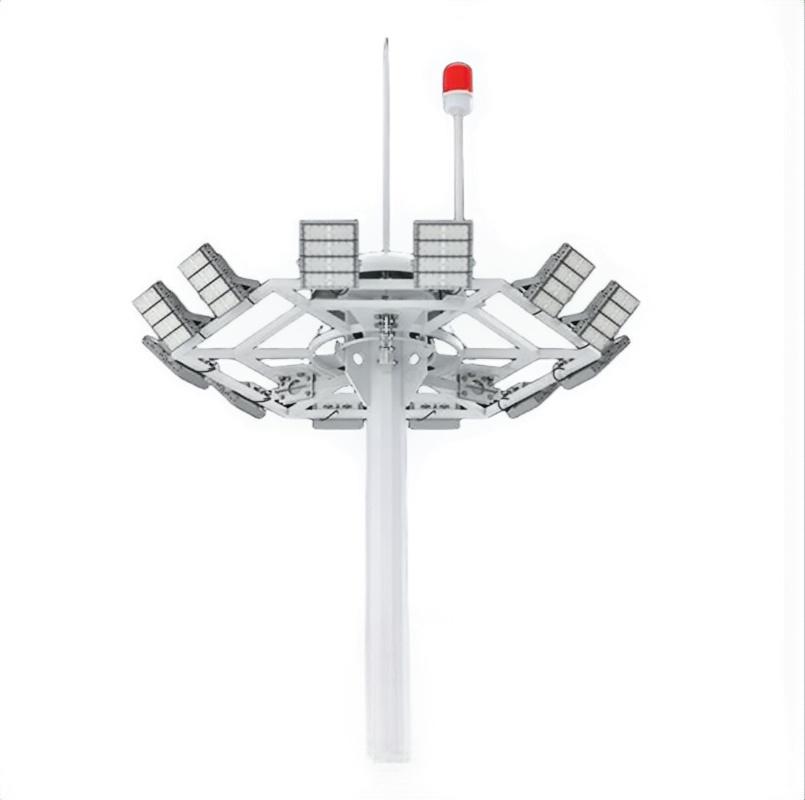
Send us your court dimensions, which sports you need to support, and your local dusk hours. We will provide a free Dialux lighting simulation showing horizontal illuminance, uniformity and GR glare maps, plus a side-by-side quotation for 4-pole and 6-pole layouts. Browse our high mast light and stadium flood light collection to see fixture options.
HRLUXSOLAR focuses on mid-to-high-end outdoor lighting with strict quality standards and a rigorous, responsible team. We take quality as the core and professionalism as the foundation to provide stable and durable outdoor lighting products.We specialize in professional services for municipal and commercial engineering projects, delivering customized lighting solutions for smooth project implementation. We support flexible customization, efficient delivery and full-process technical support to meet diverse project demands.Committed to being your trusted outdoor lighting partner, HRLUXSOLAR keeps improving to create better lighting value for your projects.
Need a Dialux simulation for your project? Click here for a free lighting plan.
Get a Quote
Scan to Wechat/Whatsapp :